
Questions and answers
What is the difference between stopping and parking?
Parking (parkering) is any time you leave the vehicle standing, even if you stay inside. The only exception is the briefest possible stop to let people in or out, or to load or unload. So under a No parking sign you may drop off a passenger. Under a No stopping sign you may not stop at all.
The definition is in the traffic rules § 1 (k). The places where you may not stop or park are in § 17. Most of them have no sign, so you need to know them.
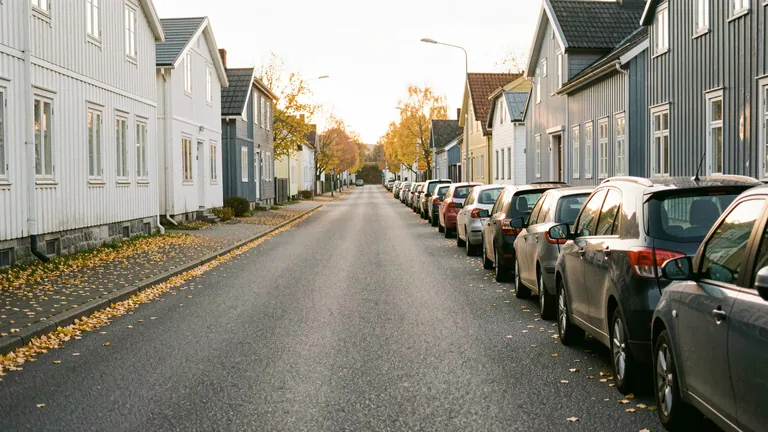
- Junction
- 5 mno stopping in it or within 5 metres
- Pedestrian or cycle crossing
- 5 m beforeafter the crossing you may park
- Level crossing
- 5 mno stopping within 5 metres
- Bus, taxi or tram stop
- 20 mfrom the stop sign
No stopping and No parking side by side
| No stopping | No parking | |
|---|---|---|
| Drop off or pick up a passenger | No stopping No | No parking Yes, as briefly as possible |
| Load or unload something heavy | No stopping No | No parking Yes, as briefly as possible |
| Wait for someone | No stopping No | No parking No |
| Collect a takeaway or a light parcel | No stopping No | No parking No |
| Sit in the car with the engine running | No stopping No | No parking No, that is parking |
| Applies until | No stopping Next junction or new sign | No parking Next junction or new sign |
Both signs only apply on the side of the road where they stand.
What the law calls parking
The traffic rules § 1 (k) define parking as leaving a vehicle standing, even if the driver stays with it. Only the briefest stop to let people in or out, or to load or unload, is exempt. Waiting in the car is parking.
"Briefest possible" is strict. The roads authority (Statens vegvesen) says the passenger must be ready, and what you load must have some weight or size. Fetching a takeaway or a light parcel is parking.
Where you may never stop
Under § 17 no. 1, all stopping is banned on a blind bend, in a tunnel, on the brow of a hill or elsewhere with a poor view, and in or within 5 metres of a junction. It is also banned on a pavement, footpath or cycle path, even partly, and on or 5 metres before a pedestrian or cycle crossing. The same goes for motorways and motor roads (motortrafikkveg), within 5 metres of a level crossing, and in bus, high-occupancy (sambruksfelt) and cycle lanes.
At a bus, taxi or tram stop, stopping is banned in the bus bay or within 20 metres of the sign. Passengers may still get in or out if you block no bus, taxi or tram.
Where you may not park
§ 17 no. 2 bans parking in front of an entrance or exit, in a passing place, in a pedestrian street, and in a home zone (gatetun) outside marked bays. On a priority road with a limit above 50 km/h, parking on the carriageway is banned. Here the briefest stop to drop off, pick up or load is allowed.
Read the stopping and parking chapter, see all prohibitory signs, or take a free theory test.
How the theory test asks about it
TrapYou are only dropping off a friend, so a quick stop under No stopping is fine.
The ruleNo. No stopping covers every stop, including letting people out. The exception for the briefest drop-off only applies where parking is banned.
TrapYou are sitting in the car with the engine running, so you have not parked.
The ruleWrong. Parking is any leaving of the vehicle standing, even if the driver stays with it (§ 1 (k)).
TrapThe 5-metre rule applies on both sides of a pedestrian crossing.
The ruleIt applies on the crossing and 5 metres before it in your direction of travel. After the crossing you may park, unless something else forbids it.
TrapA No parking sign covers the whole street, even past the next junction.
The ruleNo parking applies on its own side of the road, up to the next junction or a new sign. A parking zone sign carries on past junctions until the end-of-zone sign.
The signs that control stopping and parking
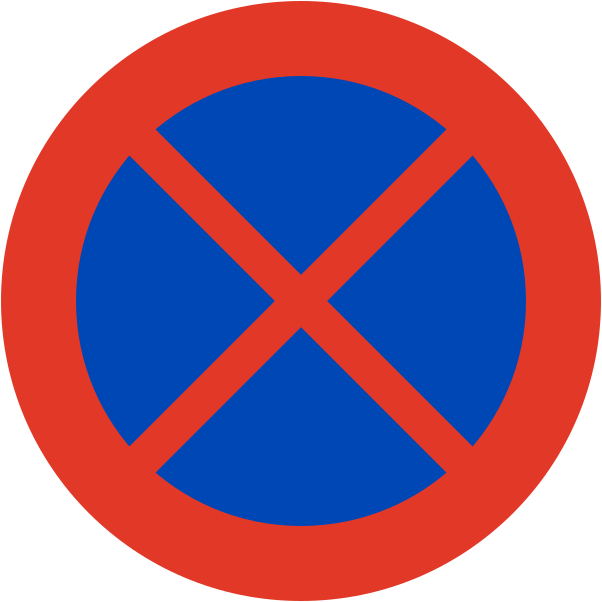
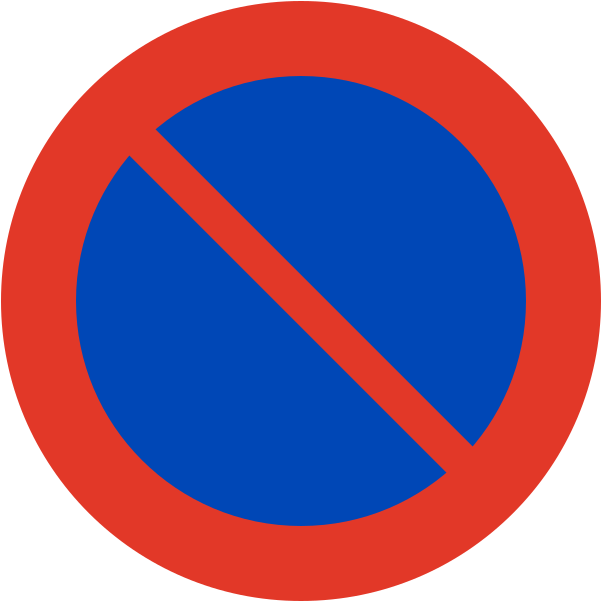
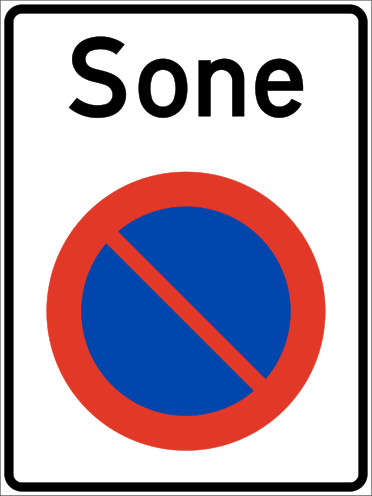
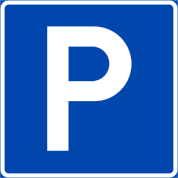
A supplementary plate can limit a ban to certain days and times. Read the whole sign before you leave the car.
Practise stopping and parking
Three questions of the kind you will meet on the theory test. They are about the stopping and parking signs.
- 1Can you stop briefly to drop a friend off at this sign?
- 2No parking "Mon–Fri 07–17" – what does it mean?
- 3Does the zone still apply after a side road?
Real practice questions with the answer and an explanation. No account needed.
Sources
- Traffic rules § 1 no. 1 (k) (parking) and § 17 (stopping and parking) (Lovdata)
- Road sign regulations § 7 and § 8 (signs 370, 372 and 376) and § 12 (sign 552) (Lovdata)
- Norwegian Public Roads Administration: parking rules and the driver's responsibility
- Norwegian Public Roads Administration: where stopping is banned
- Norwegian Public Roads Administration: parking at junctions
Checked against the sources 21 November 2026.
More questions and answers
Ready to pass the theory test?
A free account gives you a taste of every theme. Full access opens everything – 199 kr for a month, no auto-renewal.
Frequently asked questions
How close to a junction can you park in Norway?
You may not stop in the junction or within 5 metres of it. The distance is measured from where the kerb, edge line or road edge starts to curve. A sign can allow something else.
Can you park after a pedestrian crossing?
Yes. The ban covers the crossing and 5 metres before it in your direction of travel. After the crossing you may park, unless something else forbids it.
Can I stop on the pavement to carry something heavy inside?
No. Stopping wholly or partly on a pavement is always banned, also for loading and for letting people in or out. That holds even if the pavement is on private land.
How far does a No parking sign apply?
From the sign up to the next junction, or to a new stopping or parking sign. It only applies on the side of the road where the sign stands.
Can I wait for someone where parking is banned?
No. Waiting is parking, even if you stay in the car. The passenger must be ready so the stop is as brief as possible.
All questions and answers
- Questions and answers about the theory test
- How long is the theory test valid?
- How much does the theory test cost?
- Who goes first at a junction?
- Basic traffic course in Norway – how long is it?
- How many driving lessons are compulsory for class B?
- Safety course on the road – what happens on it?
- How many road sign groups are there?
- How far before the hazard is a warning sign?
- How many mistakes can you make on the theory test?
- Can you take the theory test orally?
- How do you work out stopping distance?
- What are the general speed limits in Norway?
- What are the rules in a Norwegian roundabout?
- What do the lines on Norwegian roads mean?
- What is the difference between a motorway and a motor road?
- What are the rules for learner driving in Norway?
- How much does a class B driving licence cost in Norway?
- Home