
Give-way and priority signs
The smallest group of signs, and the one that settles the most situations. These signs override the give-way-to-the-right rule and decide who yields at a junction.
Where the group sits in the regulations
The group holds 7 signs and is governed by chapter 3 of the Norwegian sign regulations: the general provisions in § 5, and the individual signs in § 6.
The signs that override the right-hand rule
At a junction with no signs, Norway's basic rule applies: you give way to traffic coming from your right. The signs in this group exist to say something different. Where they stand, the sign governs and the right-hand rule is set aside.
That is what makes this the most expensive group to confuse. A sign giving you priority only lasts as long as the priority road does, and that road can end without the junction looking any different. From that point you are back to giving way to the right.
Giving way is not the same as stopping
Having a duty to give way means you must not obstruct or endanger others — you may drive on without stopping if the road is clear. One sign in this group additionally requires you to come to a full stop, every time, even when you can see the road is empty.
The duty applies to all traffic on the crossing road, from both directions, and it applies to pedestrians and cyclists where they have the right to cross.
Six signs from the group, explained
-
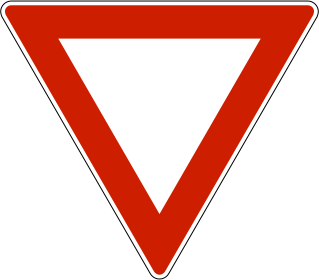 Yield 202
You must yield to traffic from both directions on the intersecting road. You must slow down and, if necessary, stop, and only proceed when it can be done without danger or obstruction to other traffic.
-
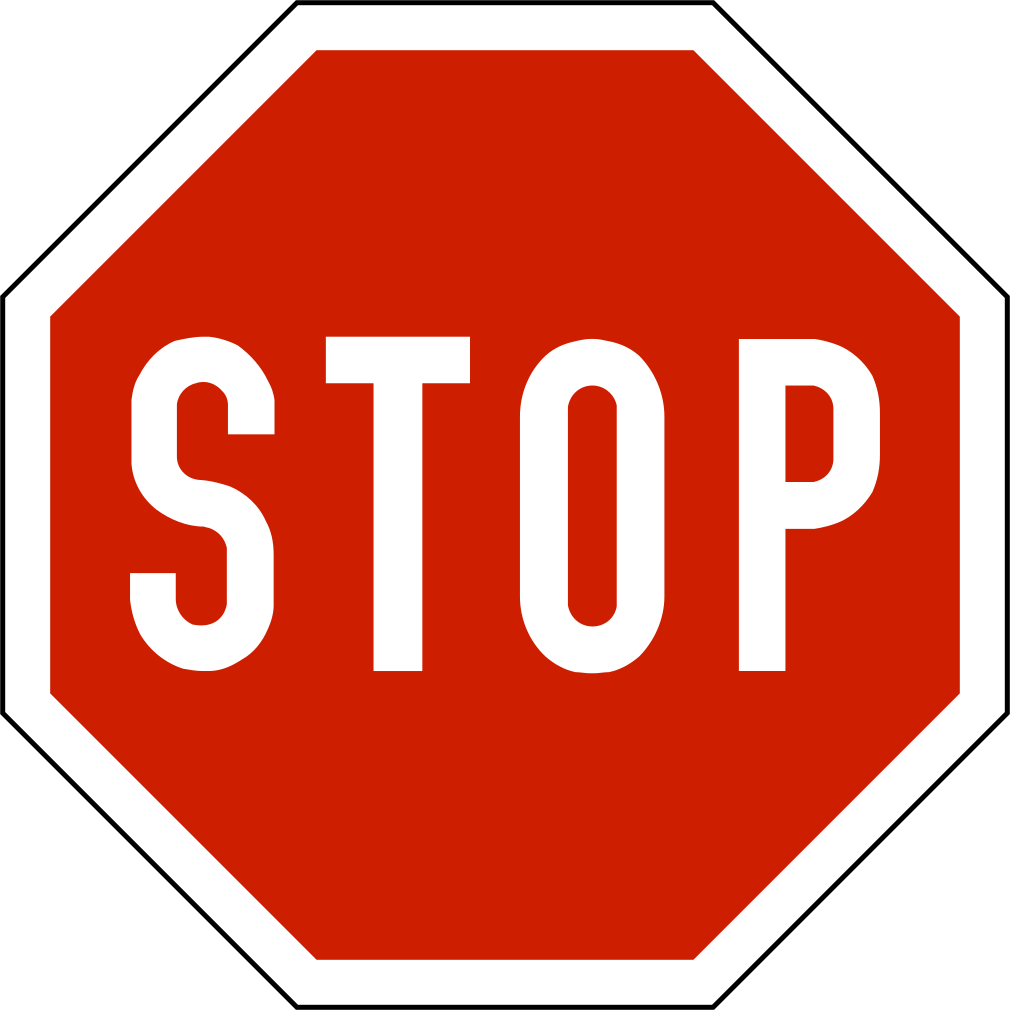 Stop 204
You must yield to crossing traffic from both directions and are always required to come to a complete stop before entering the intersection. You may only proceed when it can be done without danger or obstruction to other traffic.
-
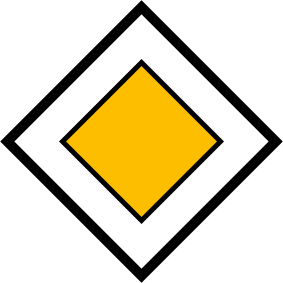 Priority road 206
The sign shows that you are driving on a priority road and have right of way at intersections along the stretch. Traffic from intersecting roads must yield to you.
-
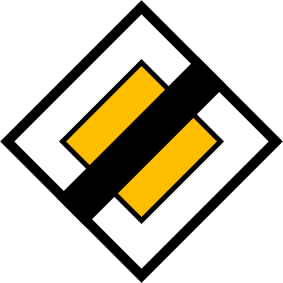 End of priority road 208
The sign shows that the priority road ends. After the sign, normal right-of-way rules apply, including the right-hand rule, unless otherwise signed.
-
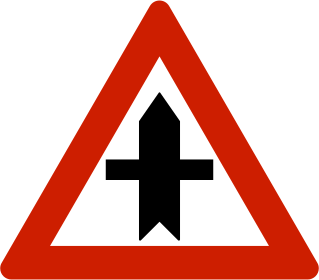 Priority intersection 210
The sign warns of an intersection where you have right of way, and traffic from the intersecting roads must yield to you. The symbol shows which roads have to yield.
-
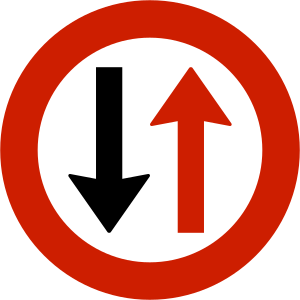 Give way to oncoming traffic 212
On a narrow stretch of road, you must yield to oncoming traffic. You must not enter the stretch if it would obstruct oncoming vehicles.
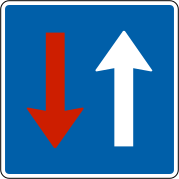
All 7 give-way and priority signs
Below are all 7 signs in the group as they actually look. Tap a sign for its name, its meaning and what the test tends to ask about it.
Frequently asked questions
What applies when there is no sign at the junction?
The give-way-to-the-right rule: you yield to traffic coming from your right. The signs in this group exist precisely to decide something other than that.
How long does priority last?
Until the priority road ends, which is marked by its own sign. After that the right-hand rule applies again, even if the road looks just as major as before.