
Warning signs in Norway
Triangular signs with a red border and a yellow ground. They warn of a hazard you cannot see yet, and they always come before the hazard — never at it.
Where the group sits in the regulations
The group holds 50 signs and is governed by chapter 2 of the Norwegian sign regulations: the general provisions in § 3, and the individual signs in § 4.
How to read a warning sign
A Norwegian warning sign is an equilateral triangle, point up, with a red border and a yellow ground. Note the yellow: several countries use white, so a driver arriving from abroad should expect Norwegian warning signs to look different from the ones at home. The shape and colour are meant to be recognisable as a warning before you have read the symbol inside.
Outside built-up areas the sign is placed well before the hazard, so you have time to slow down. Inside built-up areas it stands closer, because speeds are lower. If a supplementary plate below the sign states a distance, that distance is what applies — and a plate can also tell you how long the hazardous stretch is.
What the sign actually requires
A warning sign imposes no new duty by itself. It does not require you to stop, and it does not give you priority. What it gives you is information: something ahead requires you to drive according to conditions. The duty comes from the traffic rules and the general duty of care, not from the triangle.
That is the most common mistake in this group on the theory test — reading a warning as a rule. A sign warning that you are approaching a junction says nothing about who must give way there; the priority signs and the give-way-to-the-right rule decide that.
Six signs from the group, explained
-
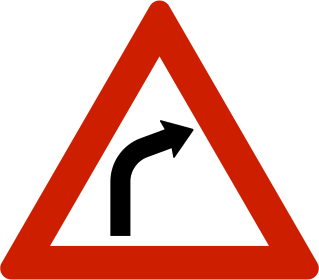 Dangerous bend – to the right 100.1
Warns of a dangerous bend to the right. Reduce speed and be prepared for the bend to be sharper or less visible than it appears.
-
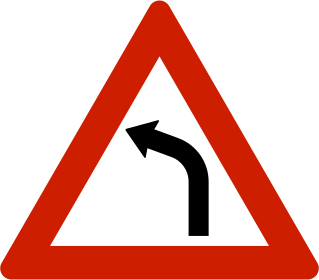 Dangerous bend – to the left 100.2
Warns of a dangerous bend to the left. Reduce speed and adapt your driving to the conditions.
-
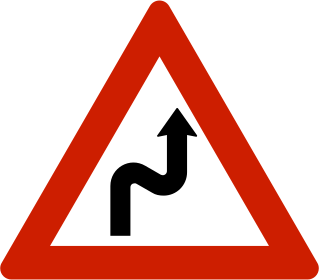 Dangerous bends 102
Warns of several dangerous bends in succession. The sub-variants show whether the first bend goes to the right or the left.
-
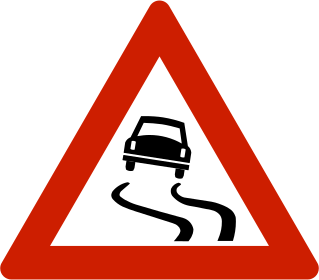 Slippery road 116
Warns that the road surface may be slippery due to particular conditions such as ice, snow, or water. Reduce speed and drive carefully.
-
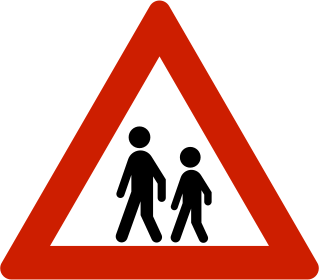 Children 142
Warns of a place where children often move about, for example near a school or playground. Reduce speed and be especially careful.
-
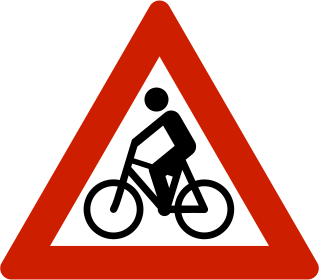 Cyclists 144
Warns of a place where cyclists often cross or ride onto the road. Reduce speed and show consideration.
All 50 warning signs in norway
Below are all 50 signs in the group as they actually look. Tap a sign for its name, its meaning and what the test tends to ask about it.
-
Dangerous bend – to the right100.1
-
Dangerous bend – to the left100.2
-
Dangerous bends102
-
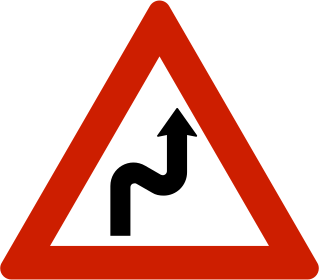 Dangerous bends – first bend to the right102.1
 -
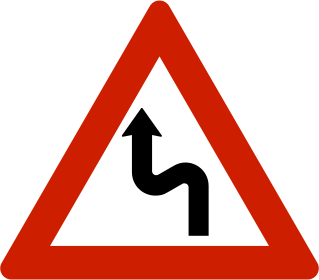 Dangerous bends – first bend to the left102.2
 -
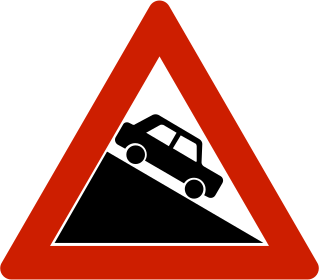 Steep hill – downhill104.1
 -
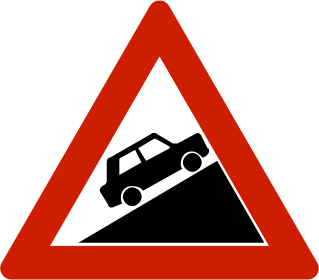 Steep hill – uphill104.2
 -
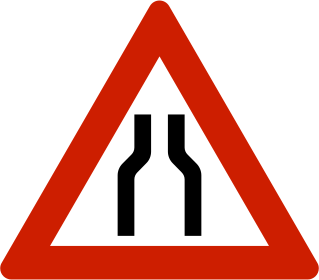 Narrower road106
 -
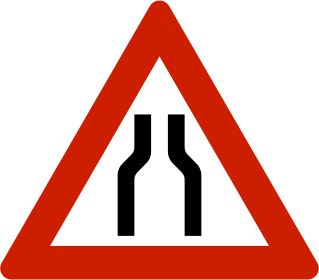 Road narrows – from both sides106.1
 -
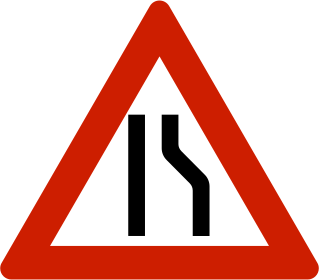 Road narrows – from the right106.2
 -
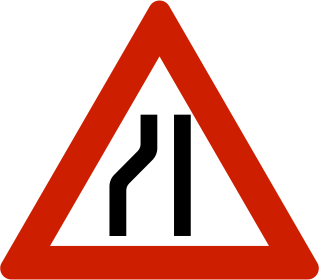 Road narrows – from the left106.3
 -
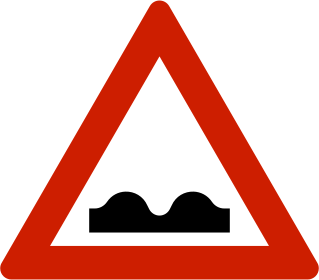 Uneven road108
 -
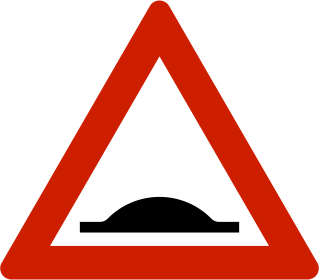 Speed bump109
 -
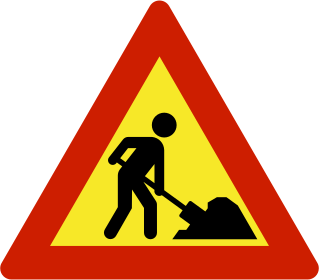 Road work110
 -
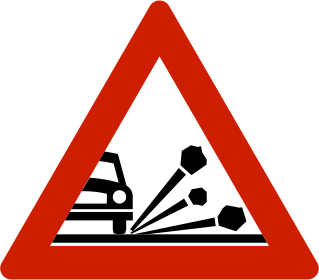 Loose chippings112
 -
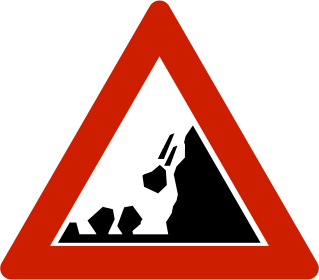 Risk of landslide114
 -
Slippery road116
-
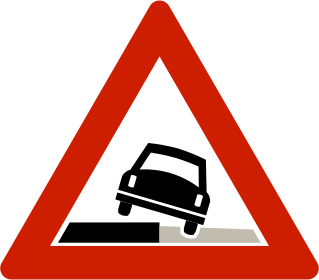 Dangerous verge117
 -
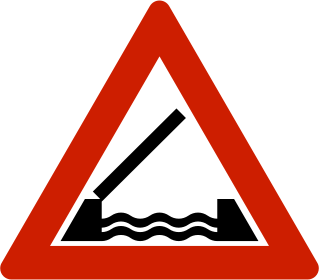 Movable bridge118
 -
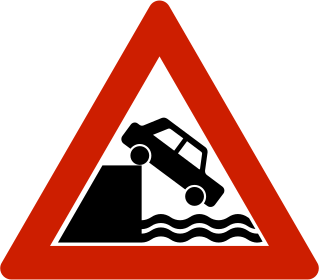 Quay, beach, or ferry landing120
 -
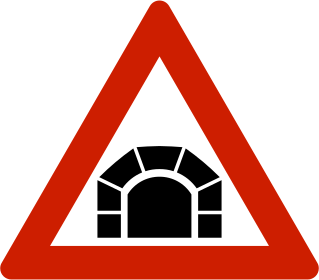 Tunnel122
 -
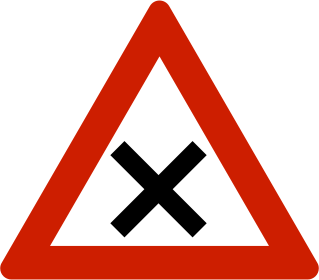 Dangerous intersection124
 -
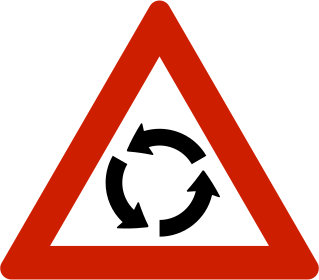 Roundabout126
 -
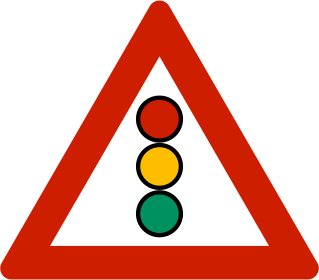 Traffic signal132
 -
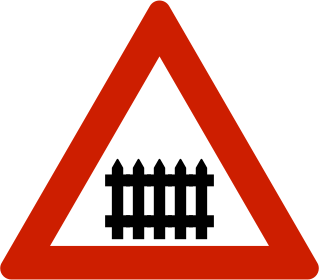 Level crossing with barrier134
 -
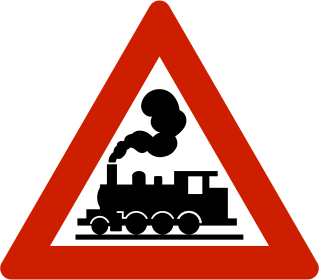 Level crossing without barrier135
 -
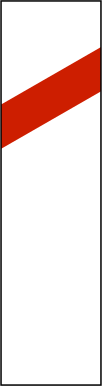 Distance sign – approx. 300 m136.1
 -
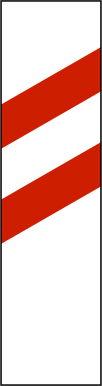 Distance sign – approx. 150 m136.2
 -
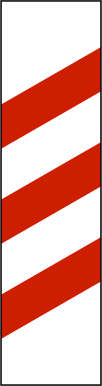 Distance sign – approx. 75 m136.3
 -
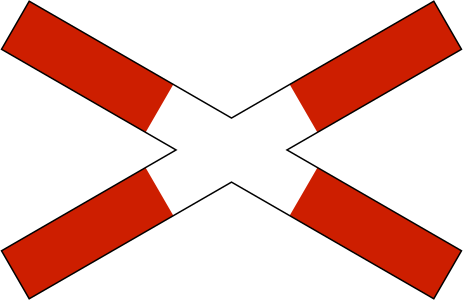 Railway track – single track138.1
 -
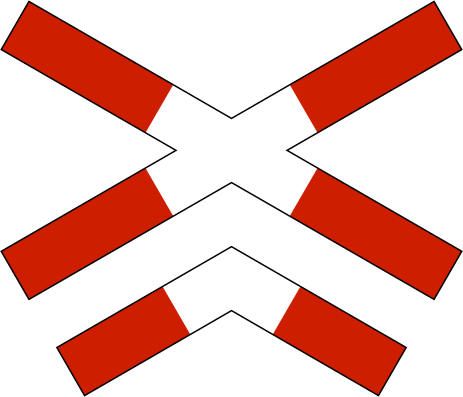 Railway track – two or more tracks138.2
 -
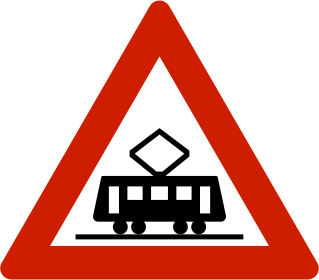 Tram139
 -
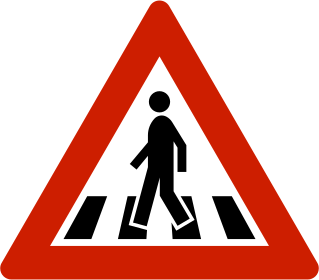 Distance to pedestrian crossing140
 -
Children142
-
Cyclists144
-
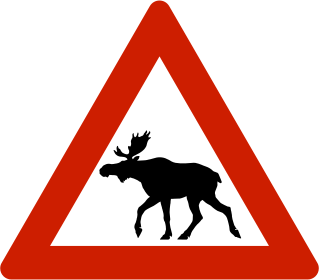 Animals146
 -
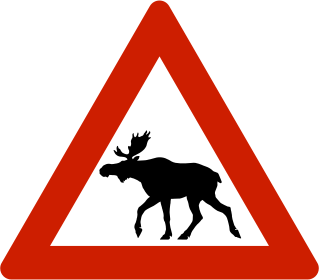 Animals – moose146.1
 -
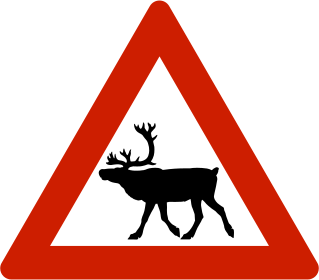 Animals – reindeer146.2
 -
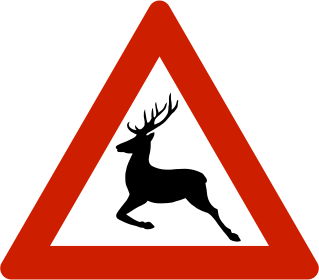 Animals – deer146.3
 -
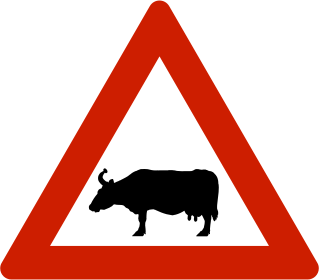 Animals – cattle146.4
 -
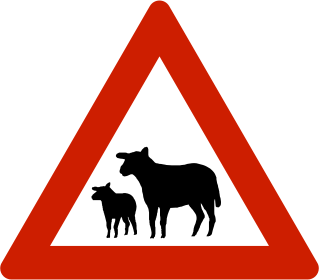 Animals – grazing livestock146.5
 -
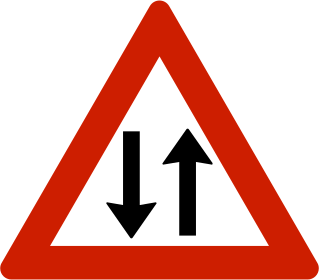 Oncoming traffic148
 -
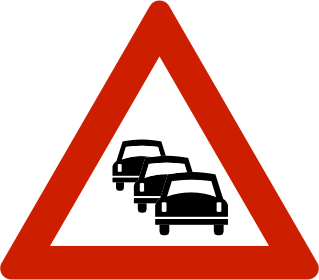 Queue149
 -
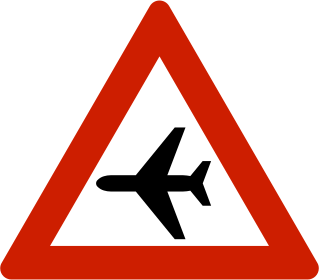 Aircraft150
 -
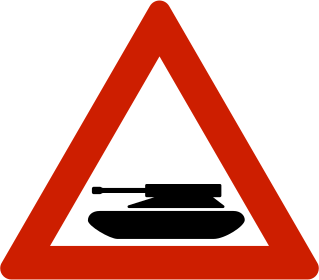 Military activity151
 -
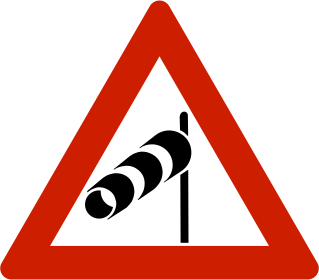 Side wind152
 -
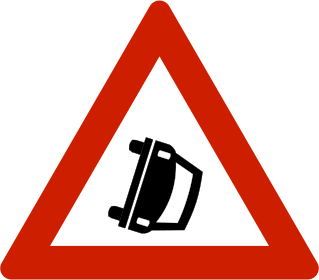 Traffic accident153
 -
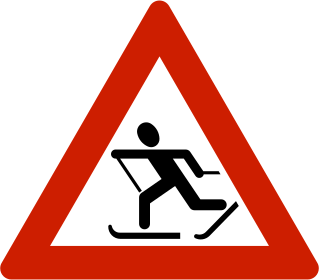 Skiers154
 -
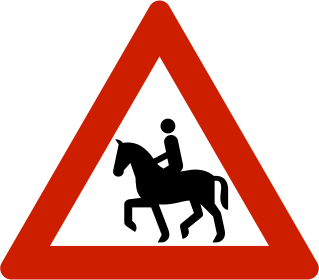 Horse riders155
 -
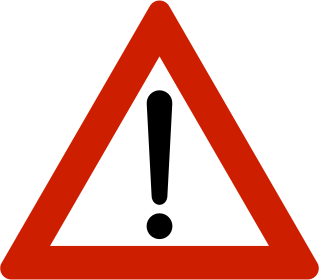 Other danger156
Frequently asked questions
How far before the hazard is a warning sign placed?
Well before it outside built-up areas, so you have time to react; closer inside them. Where the distance matters it is written on a supplementary plate, and then the plate's figure is what applies.
Do I have to slow down when I see a warning sign?
The sign sets no speed limit, but it tells you conditions may require a lower speed than the posted limit allows. You must always drive according to conditions, and a warning sign is notice that conditions are about to change.