Road signs that look alike – and the one thing that separates them
Our sign drill always offers four close alternatives, and the people who miss, miss on the same pairs. Here are eight of them, side by side, with what to look for.
The Norwegian sign regulations use shape and colour to say what kind of message a sign is before you have read the symbol. That is a strength on the road: a red ring is a prohibition, a triangle a warning, a blue square information. But it also means signs within a family look alike, and the one thing that separates them – a line, an arrow, the colour of the arrow – is small.
On the test they show you the sign and ask what it requires of you. It is not the name being tested, but whether you see the detail.
How to use the pairs
For each pair below: find the one difference, and say out loud what it does to the rule. Then take the sign drill, which shows you one sign and four close alternatives, and see whether you recognise them when they come alone.
All 277 signs, group by group, are in the signs section – the groups are described on the overview. The signs section and the drill are part of full access.
8 pairs, side by side
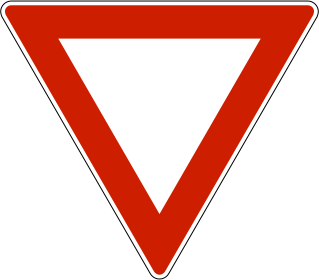
Yield202orStop204
Both make you give way. The difference is the wheels: under the triangle you may roll on into a clear gap; under the octagon the car must come to a complete stop before you go – even when nobody is coming.
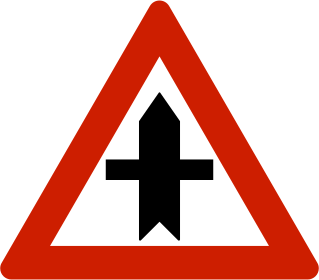
Priority road206orPriority intersection210
The yellow diamond starts a priority road that lasts until the end sign – you have priority at every junction along it. The priority-junction sign gives you priority at one junction: the next. After that the ordinary rules apply again.
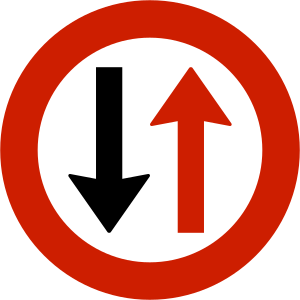
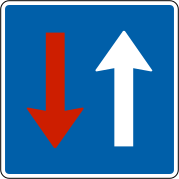
Give way to oncoming traffic212orOncoming traffic must give way214
The same narrowing, opposite messages. Look at the red arrow: if it points in your direction of travel, you are the one who waits. If the white arrow is yours, oncoming traffic waits for you.
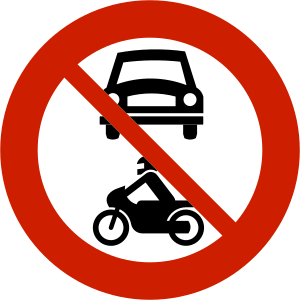
No entry302orNo motor vehicles, except small electric motor vehicles306.1
No entry closes one direction of travel – typically the end of a one-way street that others may enter from the far side. No motor vehicles closes the road to that class of vehicle in both directions.
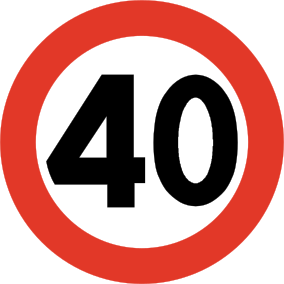
Speed limit362orEnd of special speed limit364
A red ring with a number is a speed limit that applies until it is lifted or until the next junction. A grey diagonal through the number lifts the special limit – and then the general limit applies, 50 in built-up areas and 80 outside, not free speed.
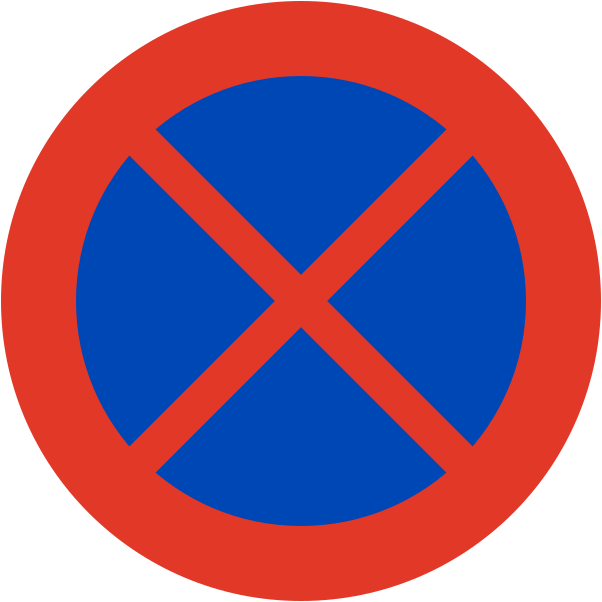
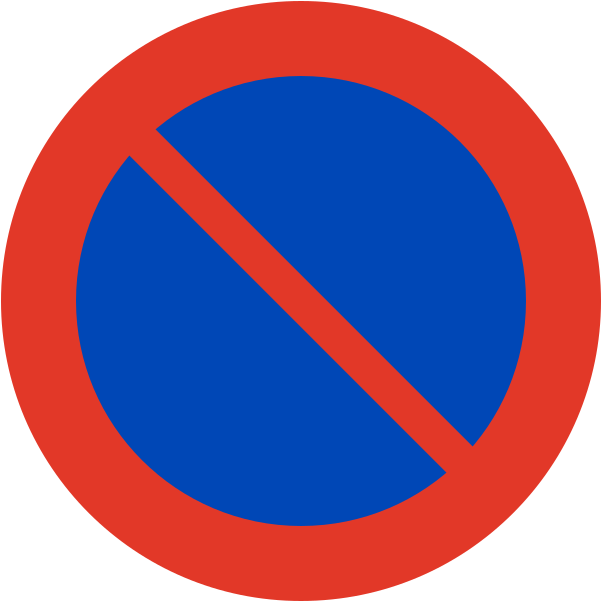
No stopping370orNo parking372
A cross or a single slash. The cross prohibits all stopping, even for a second. A single diagonal prohibits parking, but you may stop briefly to let people in or out or to load and unload.
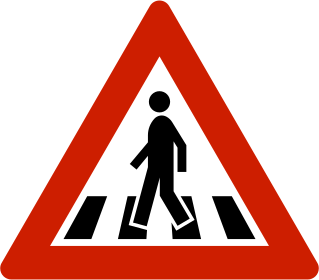
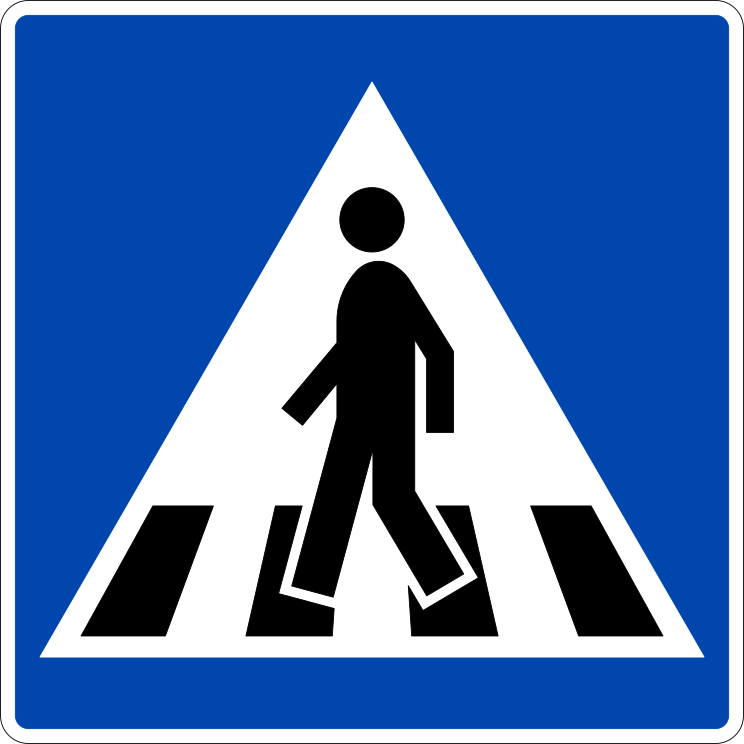
Distance to pedestrian crossing140orPedestrian crossing516
The triangle warns that a pedestrian crossing is coming further ahead – slow down and look for pedestrians. The blue square stands at the crossing itself: here you give way to pedestrians in or about to step onto it.
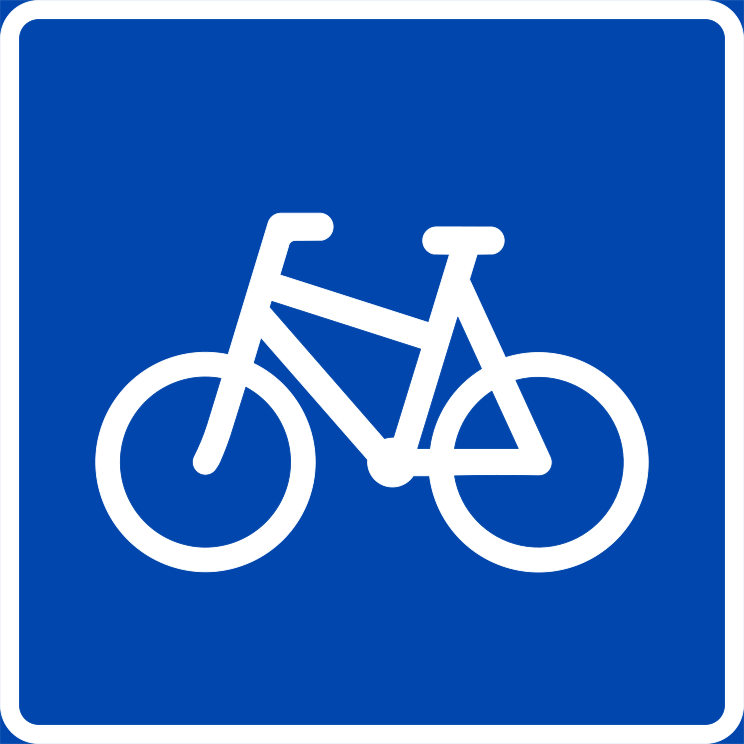
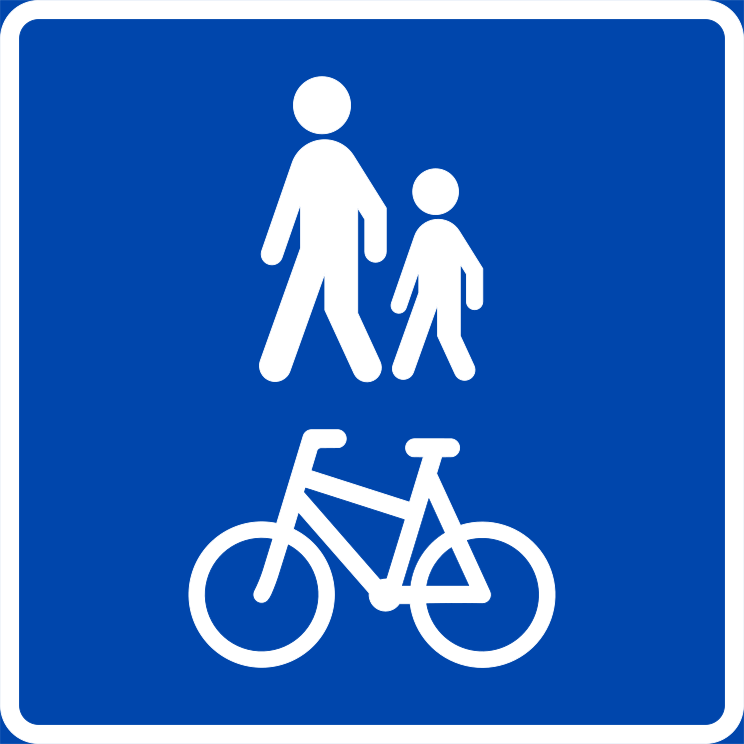
Cycle path520orCombined pedestrian and cycle path522
A cycle path is for cyclists; pedestrians should not walk there when a pavement or footpath exists. A combined path puts both on the same surface. For you in the car the key point is the same: whoever comes off one to cross your road gives way – but leave generous room regardless.
Ready to pass the theory test?
A free account gives you a taste of every theme. Full access opens everything – 299 kr for a month, no auto-renewal.
No. You are shown the sign and asked what it means or what you must do. The numbers are useful when reading the regulations, but it is the detail in the sign you need to recognise.
What is the difference between give way and stop?
Under the give-way sign you may drive on without stopping if the way is clear. Under the stop sign the car must come to a complete standstill before you enter the junction, whether or not anyone is coming.
May I stop under a no-parking sign?
Yes, briefly – to let people in or out or to load and unload. It is the no-stopping sign, the one with the cross, that prohibits all stopping.